9-12 Resources
Engage students in grades 9-12 with lesson plans and activities developed by our team and trusted educational partners.
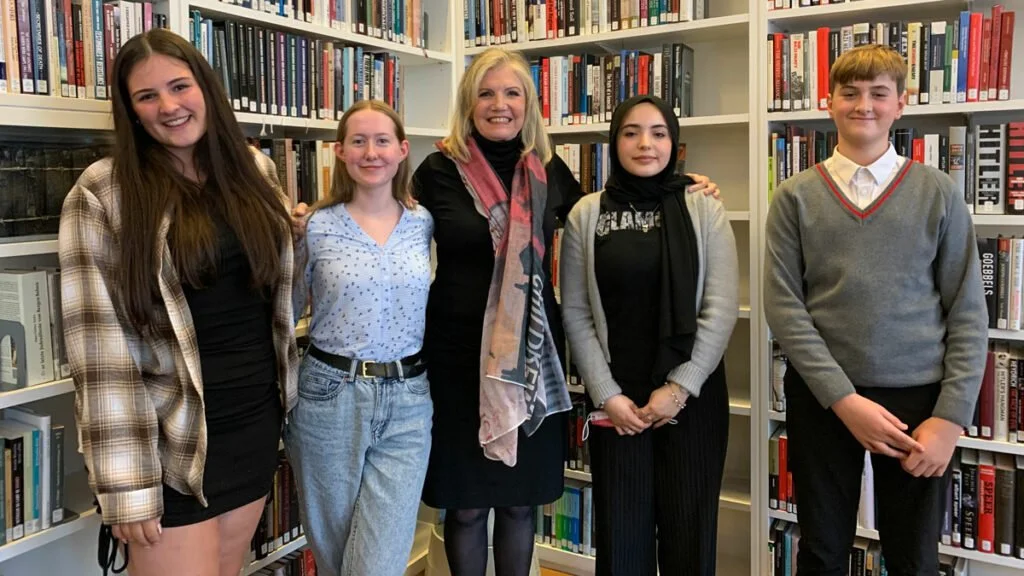
"The Children of Willesden Lane was the most heart-wrenching story I have ever read in my entire life!"
•
"The Children of Willesden Lane was the most heart-wrenching story I have ever read in my entire life!" •
– Zarisha, High School Student
HOTYM | Teacher Pathway:
Willesden Lane Theatre Project (9-12)
A Theatre-Based Educational Initiative
The Willesden Lane Theatre Project is created by Hold On To Your Music Foundation and inspired by the true story of Holocaust survivor Lisa Jura, as told in The Children of Willesden Lane. Written by playwright Emil Sher, this original stage adaptation invites high school students to explore testimony, identity, memory, and moral courage through performance and reflection.
Developed by HOTYM in collaboration with educators, artists, and students, the Theatre Project integrates story, music, and multimedia into a dynamic school experience. It includes select testimony and archival materials from The Willesden Project, USC Shoah Foundation, and Echoes & Reflections, with deep appreciation for the expertise of these partners in Holocaust education and testimony-based learning.
Script, Teacher Guide, and Student Toolkit
This downloadable resource includes the Willesden Lane Theatre Project Script by Emil Sher, alongside a comprehensive Teacher Guide and Student Performance Toolkit developed by Hold On To Your Music Foundation. Designed for high school theatre, English, and humanities classrooms, these materials offer standards-aligned lesson plans, rehearsal protocols, ethical storytelling scaffolds, and student-facing reflection activities.
Select testimony and archival materials from The Willesden Project, USC Shoah Foundation, and Echoes & Reflections are thoughtfully integrated throughout the resource, with deep gratitude for their leadership in Holocaust education and testimony-based learning.
To access the script, email playwright Emil Sher directly at emil@emilsher.com. Both U.S. and Canadian educators will find that the guides are aligned to their respective national and provincial curriculum standards.
Community Resources for a Willesden READ
-
HOTYM | Facilitator Guide to Community Conversations after viewing The Children of Willesden Lane
A HOTYM resource to support conversations and building bridges between school and home and between communities using CASEL framework for Civil Discourse
• Conversation #1: Listening, Bearing Witness, and Storytelling
• Conversation #2: Understanding Opportunity, Resilience, and Overcoming Barriers
• Conversation #3: Challenging Barriers and Building Resilient Communities
A Teacher’s Resource to The Children of Willesden Lane - with Facing History & Ourselves
The Teacher’s Resource provides a meaningful but flexible structure for examining the story Mona Golabek tells and relating it to historical and current events. It is designed for use with middle and high school students in English, social studies, music, and/or interdisciplinary studies.

Lisa Jura Family Collection - Online Exhibit with HMLA
Through the generous support of internationally renowned concert pianist and Hold On To Your Music Foundation founder, Mona Golabek, Holocaust Museum LA is proud to present the Lisa Jura Collection. This special digital exhibit honors the life and legacy of Lisa Jura through rare primary sources, artifacts, and a powerful short film, Tipping Scales: The Story of Lisa Jura.
Designed for both teachers and students, the exhibit includes a downloadable Teacher’s Guide that supports deeper exploration of Lisa’s journey and its enduring lessons of resilience, identity, and hope.
Student Activities, Lesson Plans, & Family and Community Activities
-
The Children of Willesden Lane Performance
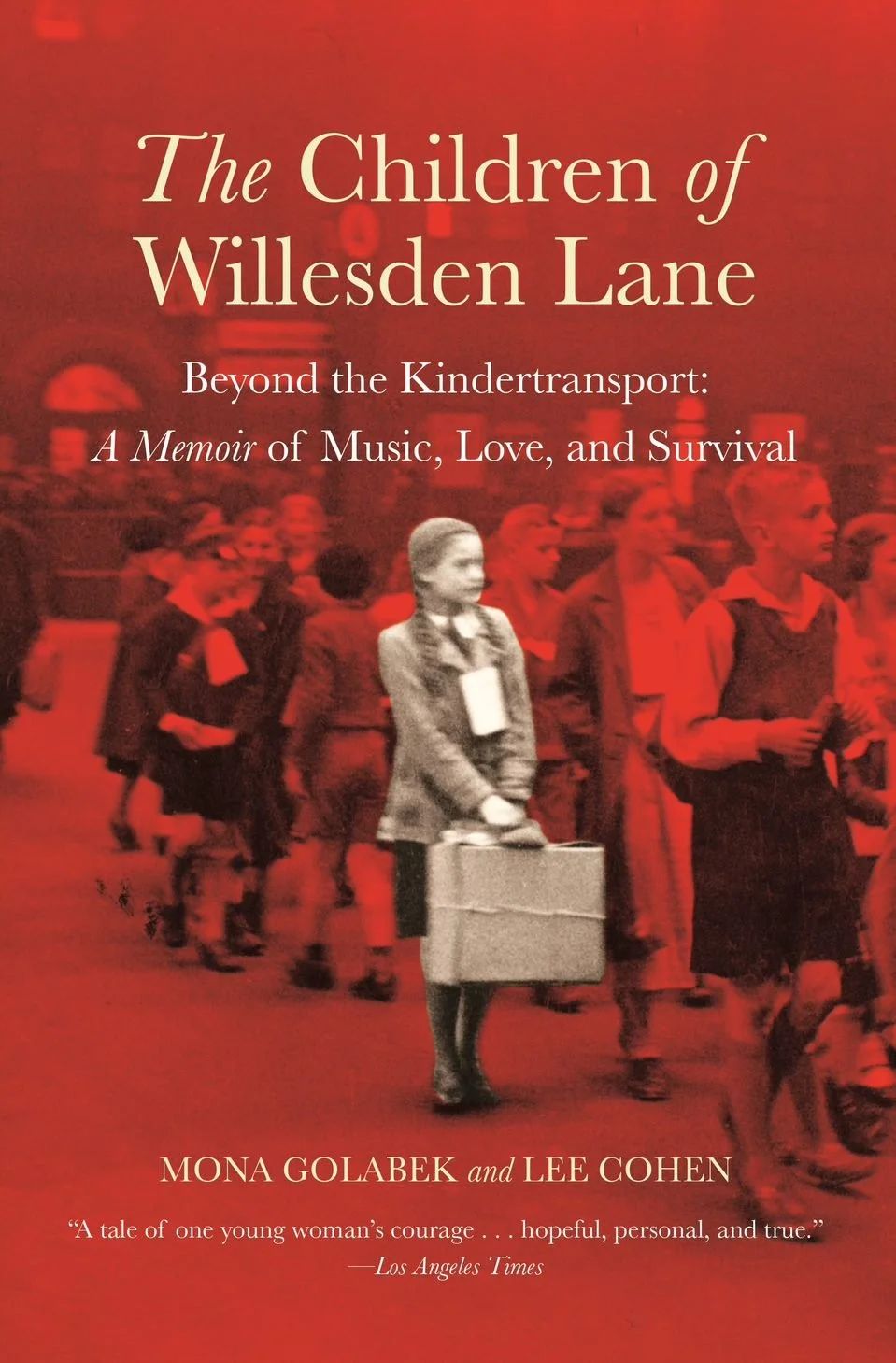
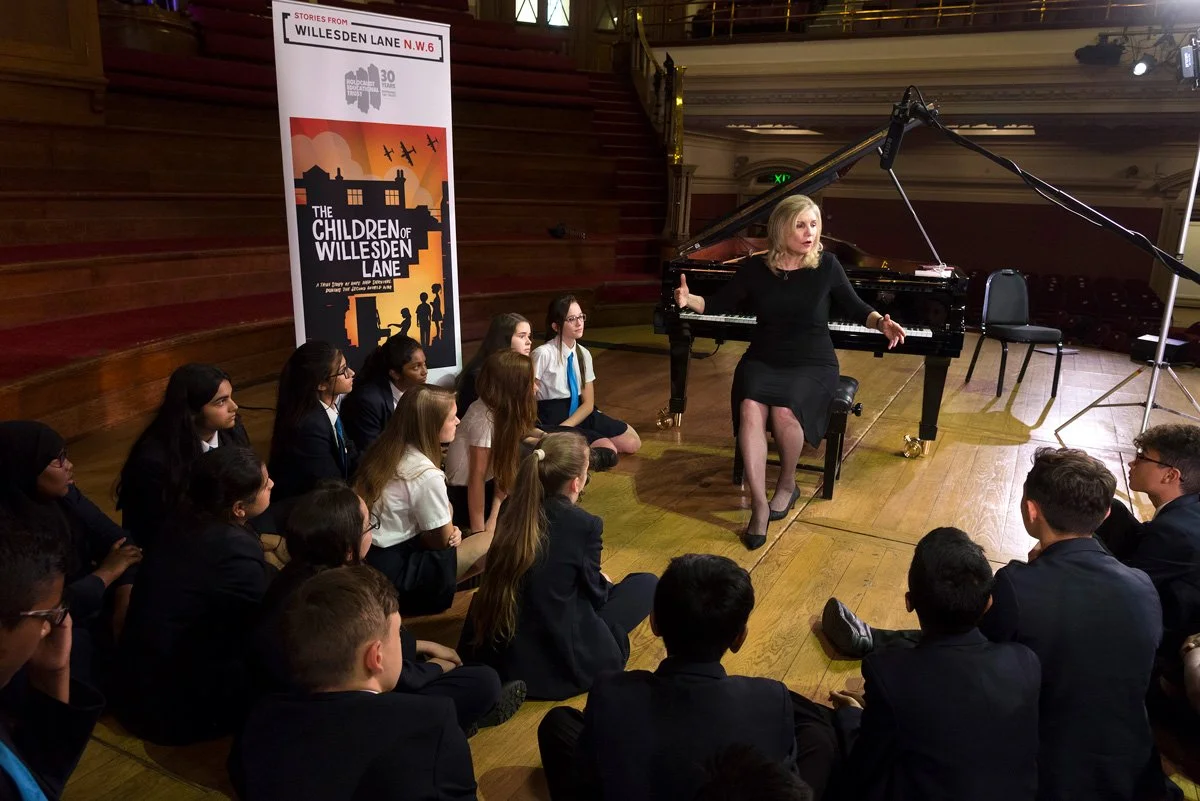
Mona Golabek, author, performer and virtuoso concert pianist and founder of Hold On To Your Music Foundation, has introduced her mother Lisa Jura’s story to over one million school children through text and musical performances around the world.
#fhtogglels/Read More +/Close –/eb
The Willesden Project makes the acclaimed theatrical show available in this 34-minute virtual, theatrical performance. Based on the best-selling book, The Children of Willesden Lane, Mona Golabek tells the story of her mother’s survival, resilience and triumph as she struggles to come of age separated from her family during World War II.
-
Making a New Life: The Courage of a Refugee Virtual Field Trip
In this Virtual Field Trip, students will walk along with Mona Golabek as they hear from three different individuals about the refugee experience. Using a lens that covers the historical refugee experience as well as the modern-day experience, students will learn how refugees adjust to their new homes and cultures and celebrate the courage people can have in times of great change.
#fhtogglels/Read More +/Close –/eb
Taking on a lens starting with the historical refugee experience to the modern-day experience, students learn how refugees adjust to their new homes and cultures and celebrate the courage people can have in times of great change.
Suitable for upper elementary and middle school students, this workshop will teach them how people gather crucial strength and support from fellow refugees and community resources. Students will also hear from real students about how they support refugees and learn about refugee stories and their experiences.
-
Music as Resistance
In this activity, students will investigate the importance of music as a tool for resistance to oppression and injustice. Using examples from both the past and present, students will analyze different ways that music has been used and consider what it means to resist in the face of extreme adversity and injustice. Students will then take action by creating or personalizing a piece of music that represents a response to an issue important to them and demonstrates the power of music as a tool for resistance.
-
In Lisa’s Footsteps: A Virtual IWalk (HS)
During this Virtual IWalk, you will follow the footsteps of Lisa Jura, a Holocaust survivor and concert pianist. As antisemitism increased in her native Vienna, Lisa’s parents sent her to safety on a Kindertransport. The Kindertransport was a series of transports from Nazi-occupied Europe that sent children to safety in England.
#fhtogglels/Read More +/Close –/eb
On this Virtual IWalk, we will trace Lisa’s life in Vienna; her trip on the Kindertransport through the Hook of Holland; her transport via Rotterdam, Holland; and finally, her arrival and life in London. Through the stories of Lisa and other survivors, you will gain an understanding of how life changed for those sent on this journey.
This Virtual IWalk features excerpts from Mona Golabek's book The Children of Willesden Lane and clips of testimony from Jewish Holocaust survivors Alice Boddy, Eric Richmond, Leah Schander, Hedwig Levenback, Hilde Gernsheimer and Ursula Rosenfeld.
-
Kindertransport: “From the mother who will never forget you”
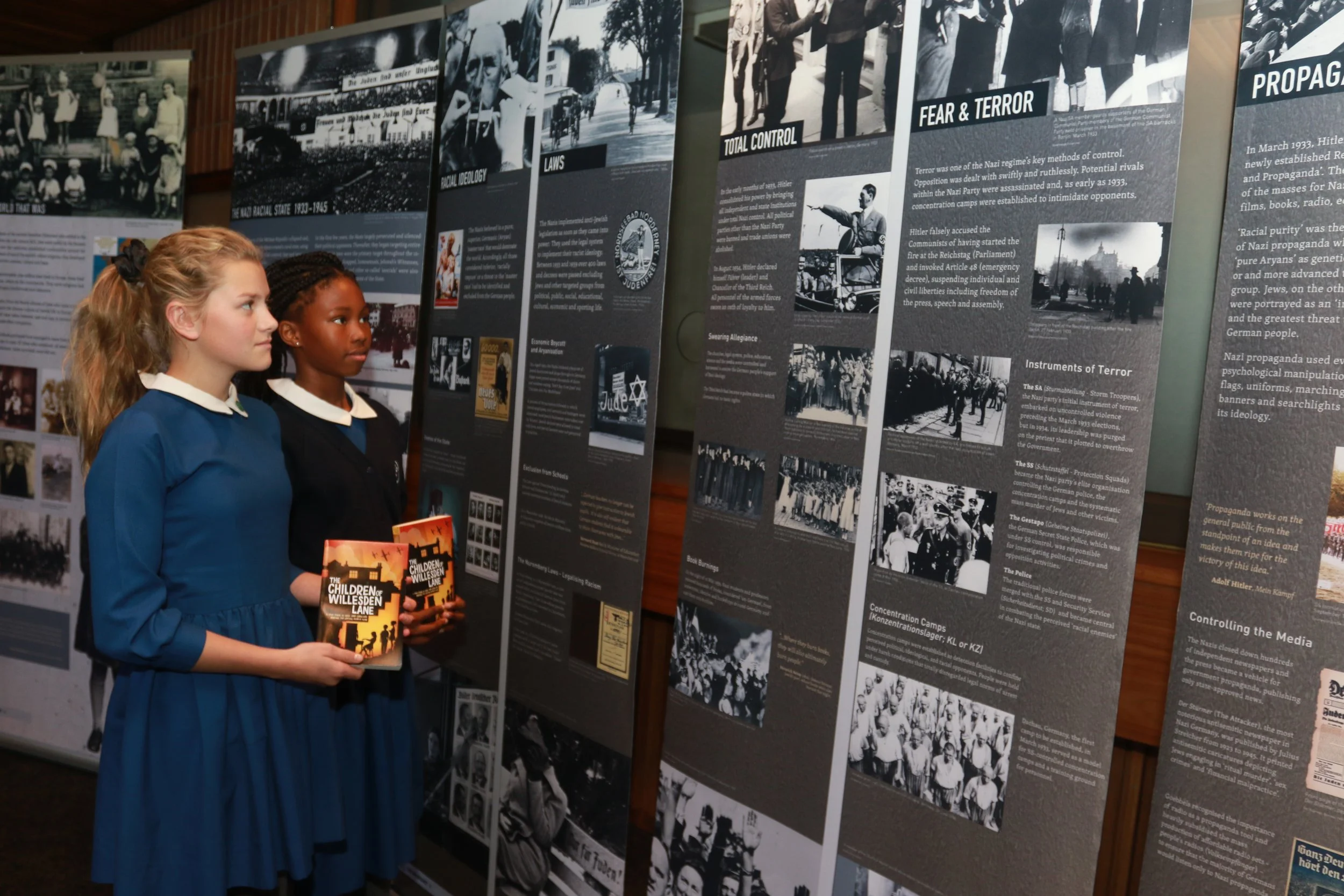
In this activity, students will learn more about the Kindertransport from Nazi-occupied Europe to England, studying primary sources to understand the historical context surrounding the literary text.
#fhtogglels/Read More +/Close –/eb
Students will read an excerpt from The Children of Willesden Lane, review a photo of children arriving on a Kindertransport and then watch testimony from child survivor, Vera Gissing, who shares her own experiences from her journey. By the end of this activity, students will develop a short poem about the journey taken by the passengers of the Kindertransport.
-
Testimony and Artistic Expression
In this lesson, students will develop a greater understanding of the link between testimony and artistic expression. By analyzing excerpts from The Children of Willesden Lane and pieces of artistic expression from genocide survivors, students will build upon their sense of empathy, historical understanding, and discipline-specific literacies.
#fhtogglels/Read More +/Close –/eb
Throughout the lesson, students will analyze clips of testimony and different forms of artistic expression through the lens of perseverance and resilience. As students build on their understanding, they will reflect on how they have used forms of artistic expression to persevere. Finally, students will apply what they have learned by researching and reflecting on modern examples of artistic expression as a form of testimony from people belonging to groups who have experienced oppression.
-
A Conversation with Edith Maniker - Dimensions in Testimony
In this activity, students will be introduced to the interactive biography of Jewish survivor, Edith Maniker, who survived the Holocaust through placement on the Kindertransport.
#fhtogglels/Read More +/Close –/eb
Students will engage with Edith through USC Shoah Foundation’s Dimensions in Testimony technology. Students will learn the techniques for having a conversation with a survivor and how to construct questions appropriately to elicit personal, historical and universal thematic responses. By the end of this activity, students will choose a creative expression to share what they have learned from Edith Maniker.
-
Information Quest: Kristallnacht
On November 9 and 10, 1938, the Nazis unleashed acts of terror and violence across Germany, Austria and the Sudetenland that became known as the Kristallnacht pogrom, or the "Night of the Broken Glass."
#fhtogglels/Read More +/Close –/eb
Government-sanctioned destruction targeted Jewish homes, synagogues and places of business. Over 30,000 Jews (mainly men) were arrested and sent to concentration camps.
In this activity, students will engage with testimonies of individuals who experienced the Kristallnacht pogrom. They will learn about the experiences of these individuals, as well as the larger effects on Germany, Austria and the Jewish community in Europe. Additionally, students will gather information from both primary and secondary sources related to this event in order to construct a word cloud, or "word picture."
-
New List Item
Description goes here